Attention: Spoilers Ahead
Dhurandhar - The Revenge is one of the very few movies I went to the theatre for — I even dragged three friends along. And it was entertainment through and through. It kept me glued to the screen and the events in the movie. It evoked so many emotions, which I want to talk about over the course of a series of blogs like this, amidst other things too. (Deeply hoping that I follow through, and not give up midway like I've given up on so many projects.)
Movie dekh ke mazaa bahut aaya!
The movie is a work of art from a lot of standpoints but for me the major standpoint is that I view art as anything that evokes emotions and this movie was successful in doing so both deeply and intensely.
The Backstory of Jaskirat Singh Rangi
I have a strong bond of love and affection towards my mother and my sister and I have always felt the strongest rage inside me whenever anyone tries to harm them in any way. The anger with which the character goes about taking down the MLA and his goons was very moving and it reminded me of Liam Neeson's famous dialogue:
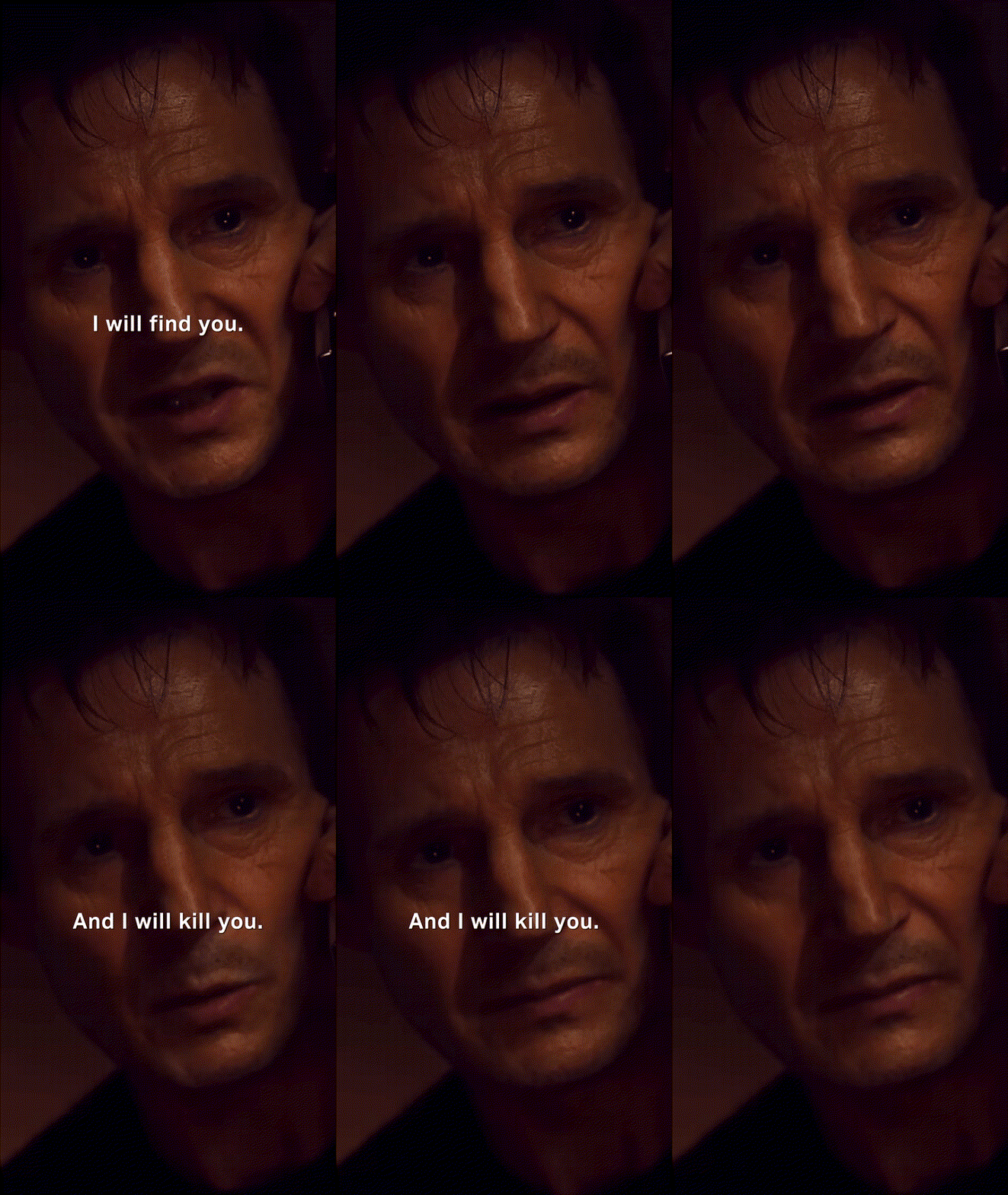
I connect to these feelings very very strongly.
National Pride
The movie opened my eyes to the events which may or may not have happened. But there was a strong sense of national pride in the way they went about execution of targets with precision. I wouldn't say that I had been aware of how many of these events were actually true. But, even if 30% of the events from the movie were true, it invoked immense respect for RAW and national pride.
Somewhere we always knew of RAW as yet another government institution, which operates in secrecy, justified so, and we would probably never get to learn about their accomplishments. With RAW being a government agency, one would expect it to perform only up to the standards set by other government institutions which we have come to learn from experiences to be often incompetent and systematically corrupt, but RAW's achievements as depicted in the movie were not a breath of fresh air but a whole oxygen cylinder that jolted me out of a slumber into an optimistic awakening.
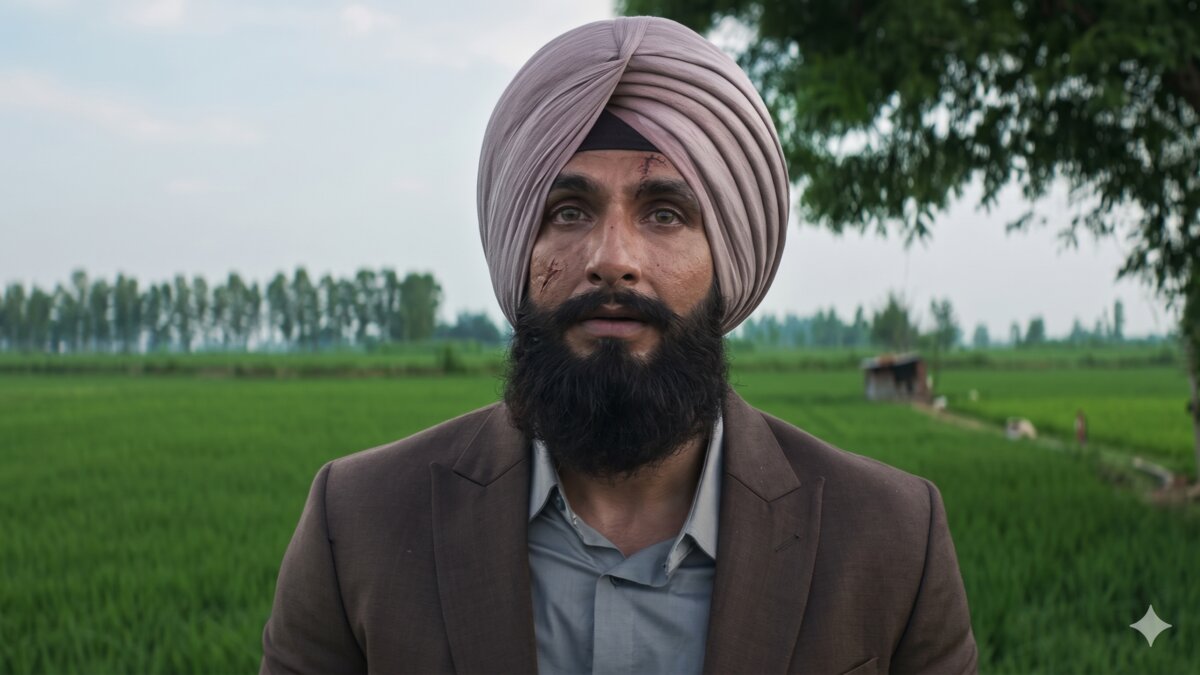
Hamza Ali Mazari urf Jaskirat Singh Rangi
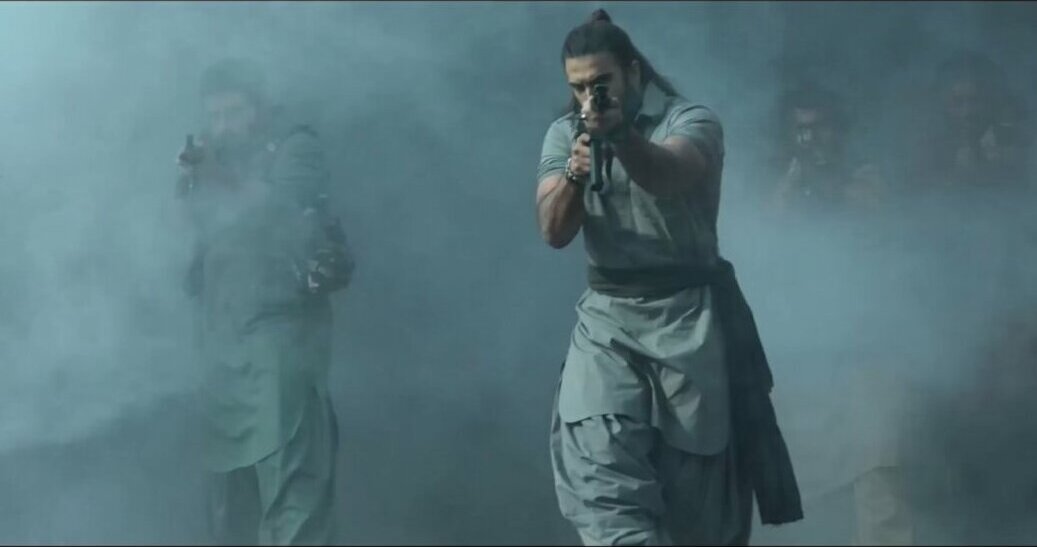
Ranveer Singh has always come across as an actor who has a lot of energy and passion which he often channelized into aspects the internet found meme-worthy or cartoonish and I found somewhat overwhelming and less palatable for my taste. However, the first thing that I noticed while watching Dhurandhar — the first one itself — was how little the character Hamza Ali Mazari speaks, which is in stark contradiction to what I'd come to expect from Ranveer.
My first appreciation went to the director, Aditya Dhar, who I felt managed to quieten Ranveer Singh for the sake of the movie, which also reminded me of how Sandeep Reddy Vanga had made the character of Bobby Deol in Animal a mute, while I strongly felt at the time that the choice was weird. My personal preference would've been to mute the character of Rashmika Mandanna, whose spoken Hindi I found horrendous.
Coming back to Dhurandhar, Ranveer Singh played the character very well. I could almost feel the effort he might have been putting in to channelize his passion and energy into acting with body and facial expressions with absolute focus, as if he were in the zone, and I realized how difficult it is to operate in a manner which can be almost unnatural to oneself. This is where I expect my friends will cherishingly point out the irony here asking me to get some inspiration from Ranveer myself.
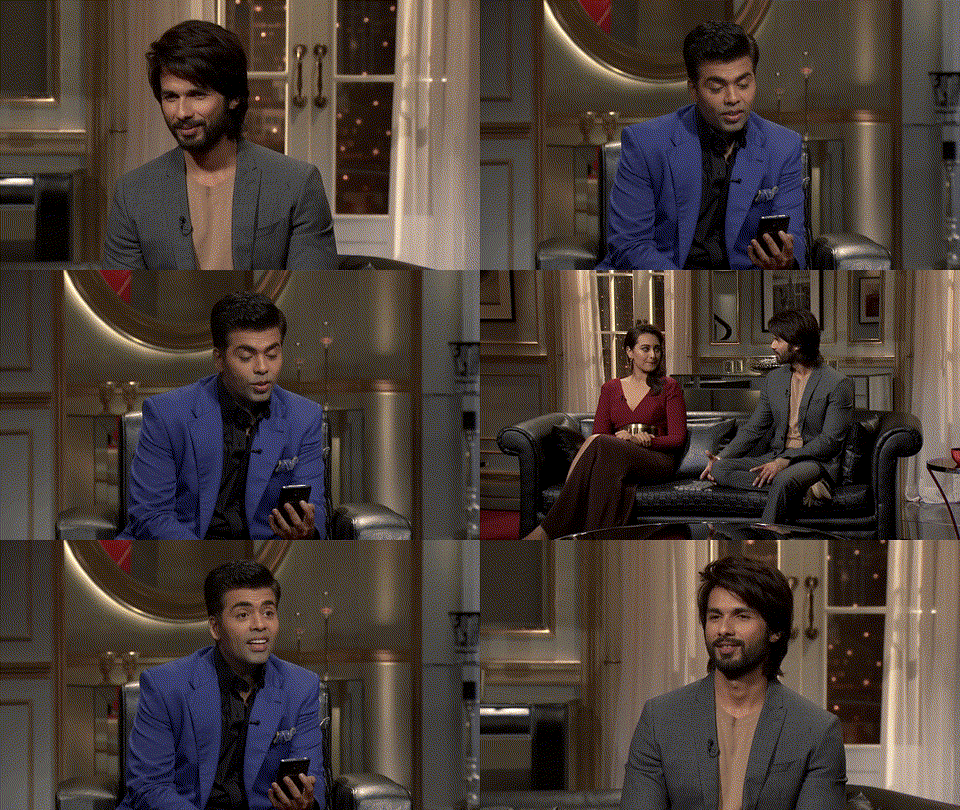
I am also reminded of an interview clip of Shahid Kapoor on Koffee With Karan. When asked if Ranveer could do the role that Shahid played in Kaminey, he was quick to point that while Ranbir could, Ranveer could not. And at that time, I would see his point and agree to that. However, after seeing Ranveer's performance in Dhurandhar, I am happy to be proven wrong and am more than happy to correct my opinion going forward. I wonder what Shahid has to say now if asked the same question again.
I specifically noticed that there were long scenes where Ranveer didn't have dialogues. For the amount of screentime and presence he had in this movie, he had incredibly few and less grandiose dialogues, which is exactly what the script demanded. Recall the most memorable dialogues and see how many of them came from Ranveer Singh.
Even in the ending scene, when he goes back to the doorstep of his home, he looks and only speaks his emotions through expressions, not a single word. Silent — yes, powerful — overwhelmingly so.
Jameel Jamali
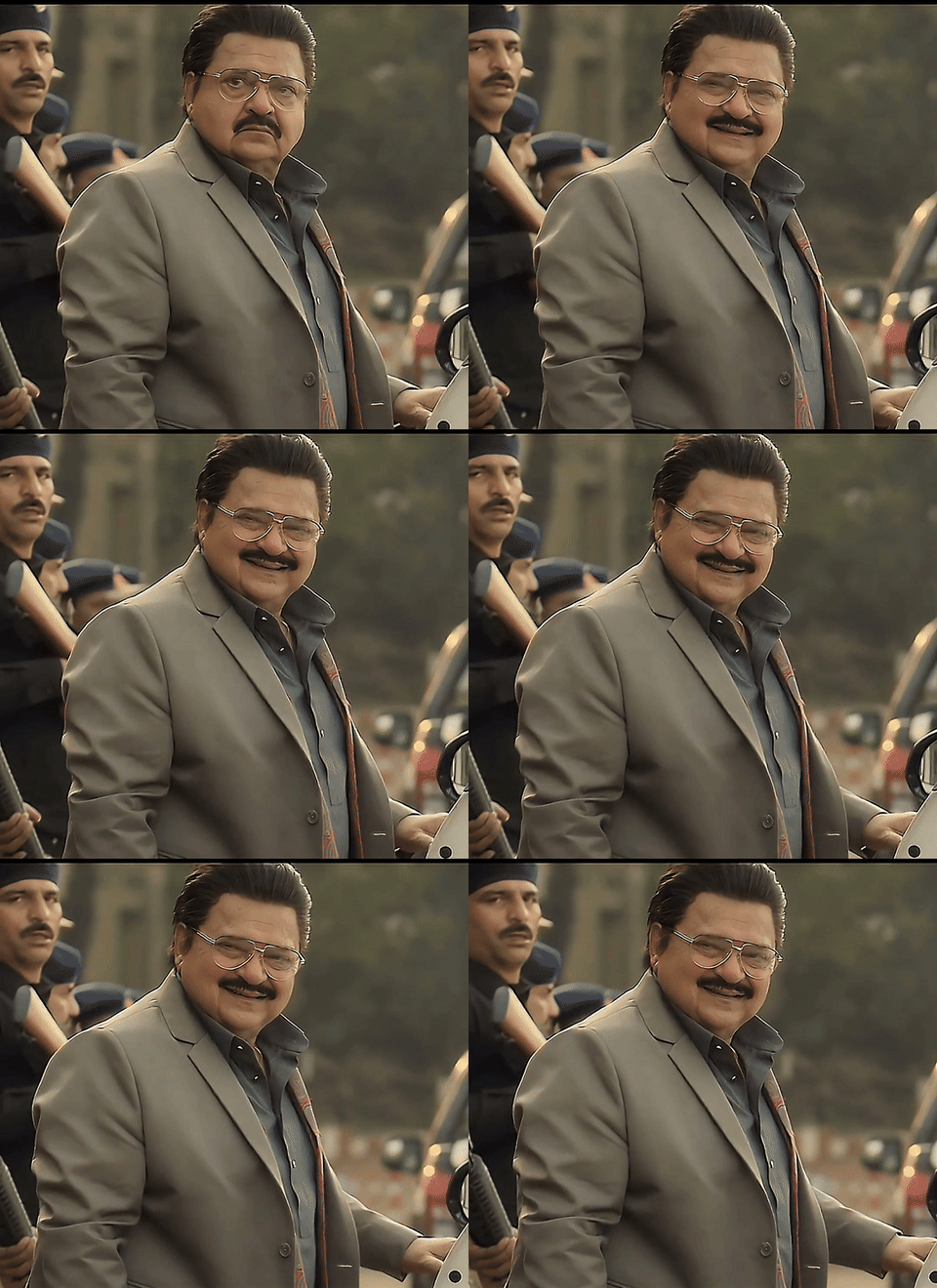
Rakesh Bedi has immortalized this character. When this character first appeared on the scene, the first impression was that of a two-faced person in politics, 'jo kisi ka saga nahin hai' and evoked a strong sense that I would particularly enjoy watching the fall of this character as the movie progresses, continuing to watch in anticipation. And it came as well, when Akshaye Khanna's character declares his own party and then gets support from a major party as well.
Along the way came the goofiness and not-so-subtle change of expressions and dialogues which I found very cute and enjoyable. The iconic line — 'bachcha hai tu mera' — was somewhat weird to begin with but the way he continued to deliver it in the character, it became more and more enjoyable.
One particular scene is quite close, which was his commissioning of the Lyari Task Force and re-induction of SP Aslam. He's shown to be wearing a cloth around his neck which has nothing but US Dollar currency printed all over it, reminiscent of the obsession a lot of people in the subcontinent have about going abroad and having the opportunity to earn in $$$. Then came the delivery of yet another very relatable line — 'jawaani ke josh-o-kharosh mein kari hogi koi galti …….. tune'.
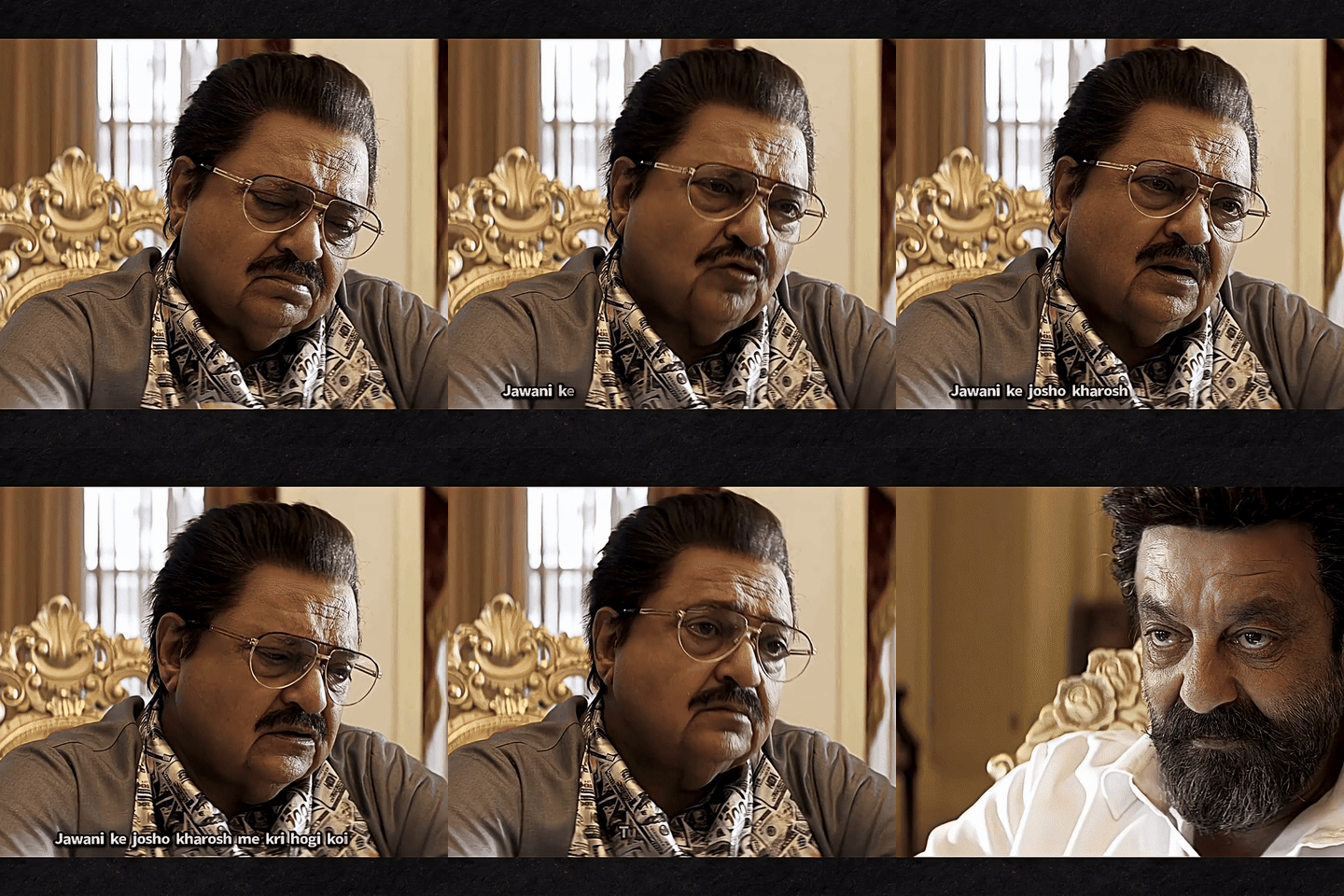
This is particularly relatable because this is something of an internal joke between me and my sister, for over two years, when we would discuss something and then decide on a certain action to be taken and it would almost always have this kind of line — 'haan yeh kar lena chahiye …… tujhko' — as if handing over the responsibility completely of the action to be taken on the other person, which would be followed with an enjoyable mutual giggle.
Rakesh Bedi, while most of the internet is going gaga over his past role in Yes Boss serial, for me personally the one that has been stuck in my mind was his performance as Dilruba in Shrimaan Shrimati. So much so, that when my sister got a cat a couple of years ago and we were thinking of names for him, Dilruba was one of the names that popped right in my head. While she was quick to point that the cat's a boy and not a girl, I was quick to retort that Dilruba was the boy's name in Shrimaan Shrimati, which she had fewer memories of, since she was smaller at that time.
The other very enjoyable dialogue was — 'His buttocks(ducks) are very white' — so well delivered using translational puns, it was hilarious. Then came another display of his duplicity where he smoothly switched parties and replaced all the pictures in his office and home, it had come to a point where it was not irritating or repulsive but only funny.
Slowly, as the character transformed into someone enjoyable and the urge to watch him fall had slowly been satiated with him operating at mere directions of the Indian agent, and towards the later part of the movie, after SP Aslam's death, he had become largely irrelevant in my mind space.
Then comes the ultimate twist/reveal, where he turns out to be Dhurandhar OG in the movie. It was awesome and the surprise on Ranveer Singh's face was beautiful. The expressions on Jameel's face almost saying — 'Baap baap hota hai' — or rather his own dialogue, albeit with a more serious tone — 'Bachcha hai tu mera', as in referring to his seniority in the lineage of Dhurandhars. This gives a whole new meaning to the dialogue — 'Bachcha hai tu mera'.
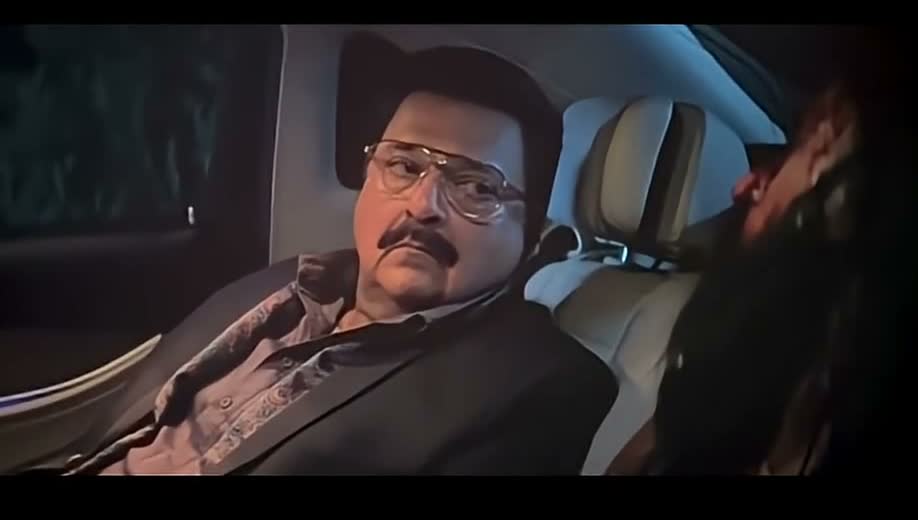
For decades, the common dialogue used in Indian-Pakistani verbal altercations from Indian side is 'Baap baap hota hai', but now instead the dialogue — 'Bachcha hai tu mera' — is equally fitting, maybe even better, where Bachcha is being referred to Pakistan as a whole or any of its representatives, by the speaker on behalf of all Indians. I can totally imagine that in cross-cultural circles in neutral lands where individuals from both countries are trying to one-up each other, often in playful banter and even more often in winning micro-battles, while in the past the go-to dialogue used to be 'Baap baap hota hai', going forward the dialogue is going to be 'Bachcha hai tu mera' which can be delivered in a much more fun banterish manner, less confrontationally but even more patronizingly, establishing one's comprehensive superiority over the other.
This reveal added more depth to the scene of the conversation between Jameel and Hamza towards the end of the first movie, where Jameel kisses Hamza's ring and submits to his superiority going forward. This is so because all this while Jameel knows who Hamza is, willingly defers to him, while knowing all along that he himself is the senior officer on the mission, without divulging his identity to Hamza. That was phenomenal. It is so amazing that while the character of Jameel Jamali remains largely the same throughout the movie, except for the final reveal, my emotions towards this character evolve so dramatically, from pure hatred to finding him endearing.
If I were to ever meet Mr. Rakesh Bedi, I will ask him — 'Fanta pila do uncle, bachcha hoon main aapka!'
Music
Maut hi daal di! There was so much nostalgia! The selection of songs and their adaptation from the originals and their placements were so beautiful. It made the movie all the more enjoyable.
The particular one that I enjoyed was Hawa Hawa in its original rendition. Then there is the Arabic song Didi Didi, Oye Oye and Tamma Tamma — created so much nostalgia for us brought up in the 90s. The punchy rendition of Aari Aari and the soulful Satinder Sartaaj in Jaiye Saajna, the surs and ragas in Jaan Se Guzarte Hain by Khan Saab, even the background score in the chapter Unknown Men — the list is endless and the placements so apt. In fact, the score throughout the movie is extraordinary. For me, it accentuates all the scenes, bringing out the optimum flavours from the script like spices in biryani, without overwhelming.
One specific track I'll go on a rant about is Rasputin. It was so enjoyable. It is one of the not so well-known tracks, which I've proudly introduced to my circle of friends over many years, and watching it in the movie was the validation for my taste in music. So, it is not just a song — it is inspired from the true events towards the beginning of the Russian Revolution and towards the end of the Czars in Russia, and tells one of the most scandalous true stories of that era. Grigori Rasputin was indeed a true person. The song itself is almost 50 years old, and there are dance-along videos with animations on YouTube from even 15 years ago. And it's so much fun to get your friends/partner/kids to join in for a fun experience, just dancing along to the song. There is a sibling trio who has created dance-along videos 9 years apart and the energy of the dance and fun is uplifting.


The music throughout was immersive — it gave me goosebumps, a treat to the ears, without overwhelming at the same time. It is not surprising that the composer Shashwat Sachdev is from the same generation of upbringing as me.
Curiosities
I always felt after watching the first movie that Bade Sahab is going to be the character of Masood Azhar or Hafiz Saeed, as from what I've learnt over the years, they are the ones hell-bent on channelizing the whole of Pakistan's machinery towards spreading terrorism in India. I wasn't so sure as to how deeply involved Dawood Ibrahim himself is in the cause — that the relation between him and Pakistan is not of shared objective but where Pakistan has effectively let him be at the epicentre of terrorism against India.
Particularly, when I consider that he himself was born and brought up in India and while the Pakistani Punjabis carry so much superiority over all other communities within their country themselves, they couldn't even consider Bangladeshis, their former compatriots, at their own level. How could they let Dawood rise to so much power that even ISI is operating under his direction? So, that was something that makes me curious about his rise of power in Pakistan. My current belief is that he would've leveraged the political inefficiencies, his ill-acquired wealth, offered his network of operatives in India to Pakistan to execute their evil deeds to rise to the level that he did — but the whole journey would be a story in itself worth at least a documentary.
Another thing I am curious about is why would Israel be interested in the nuclear secrets of Pakistan, assuming Israel already has nuclear weapons — because technologically they don't have anything to gain from that. The only reason I can think of is that given Israel and Pakistan are essentially strong enemies, it would be of interest to Israel to somehow use those secrets to neutralize their nukes.
Wishes
As a former hookah/sheesha lover, I couldn't help but wish that in the cultural display of the Balochi tribes a hookah was shown somewhere on the sides as casually present.
Secondly, I would've also enjoyed even more if there was a song inspired from 'Freedom' from Django Unchained placed with a view of the Balochi tribes motivated to fight to seek freedom from Pakistan — would've given me even more goosebumps, with the song potentially becoming a new era anthem for the real-life Balochi tribes fighting against Pakistani oppression.
Why I Enjoyed
Of course I enjoyed because of the emotions that I experienced while watching the movie. One particular thing I felt that made it even more enjoyable was that the first part focused on building the emotional investment into exacting revenge. The feeling kept simmering and its complete arrival kept on getting delayed and delayed and when it was delivered, it was so comprehensive that it was very fulfilling. I find it similar to Gangs of Wasseypur in this particular aspect.
Also, I found the movie enlightening in a way that is reminiscent of Black Friday. Growing up, we had little knowledge of the events of 1992-93 and it was only upon viewing the movie Black Friday that the events and their gravity hit me. The culminating song — Are Ruk Ja Re Bande — still humbles me and gives me goosebumps to this date.